Calming the Storm
“When the mind runs after the wandering senses, then it carries away one’s understanding, as the wind carries away a ship on the waters. Therefore the wisdom of him whose senses are withdrawn from the objects of the senses stands firm” (2:67, 68).
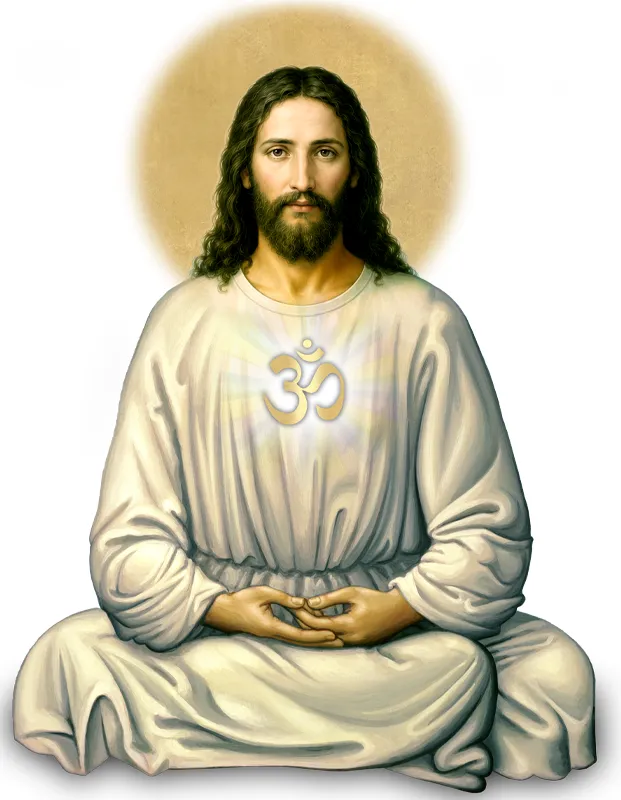
The theme of peace is being continued in these two verses, and its imagery brings to mind the following: “When the even was come, he [Jesus] saith unto them, Let us pass over unto the other side. And when they had sent away the multitude, they took him even as he was in the ship. And there were also with him other little ships. And there arose a great storm of wind, and the waves beat into the ship, so that it was now full. And he was in the hinder part of the ship, asleep on a pillow: and they awake him, and say unto him, Master, carest thou not that we perish? And he arose, and rebuked the wind, and said unto the sea, Peace, be still. And the wind ceased, and there was a great calm.…And they said one to another, What manner of man is this, that even the wind and the sea obey him?” (Mark 4:35-41) Rather than being some special, unique person that we can only admire, Jesus was exactly what each one of must become. We, too, must bring peace into our stormy minds.
The storm
It is the wind and rain of the senses that “carries away one’s understanding, as the wind carries away a ship on the waters.” However much the “captain” of the buddhi grasps the wheel or tiller and tries to hold the ship steady on its course, the struggle is hopeless. This is because, as the verse literally says, the mind wanders after the senses and becomes guided by them, losing its intelligent awareness (prajnam). Caught then in the heaving waters of samsara, of constant birth and death, with their attendant anguish, each of us is carried away by the waves, lost and disoriented completely.
Swami Prabhavananda renders this verse: “The wind turns a ship from its course upon the waters: the wandering winds of the senses cast man’s mind adrift and turn his better judgment from its course.” “Better judgment” is the translation Swami Prabhavananda uses for prajnam. Prajnam means both consciousness and awareness, and includes the knowledge gained by the evolving Atman. Just as Krishna has described before that we lose “memory,” the lesson of experience. It is prajnam that we lose.
The statement that we are turned from our course points out a basic truth: by nature we are all “on course,” and our drifting is unnatural. Therefore when we set our wills to recover our course, there is no doubt that we will succeed. It is inevitable. In the sixth chapter of the Gita, Arjuna will say that the wind is no harder to subdue than the mind, and Krishna will agree. But the mind must be subdued, nevertheless. That is easy to say, but how? “The wisdom of him whose senses are withdrawn from the objects of the senses stands firm.” And how do we effectively say, “Peace, be still” to the senses?
The mind
We must understand that the senses are simply instruments (indriyas) of the mind, that although they “cast man’s mind adrift” this is the reversal of the natural order, that it is the mind that is meant to control the senses, the way a charioteer drives the horses that pull the chariot. Krishna surely had in mind this passage from the upanishads:
“Know that the Self is the rider, and the body the chariot; that the intellect is the charioteer, and the mind the reins. The senses, say the wise, are the horses; the roads they travel are the mazes of desire. The wise call the Self the enjoyer when he is united with the body, the senses, and the mind. When a man lacks discrimination and his mind is uncontrolled, his senses are unmanageable, like the restive horses of a charioteer. But when a man has discrimination and his mind is controlled, his senses, like the well-broken horses of a charioteer, lightly obey the rein. He who lacks discrimination, whose mind is unsteady and whose heart is impure, never reaches the goal, but is born again and again. But he who has discrimination, whose mind is steady and whose heart is pure, reaches the goal, and having reached it is born no more. The man who has a sound understanding for charioteer, a controlled mind for reins–he it is that reaches the end of the journey, the supreme abode of Vishnu, the all pervading” (Katha Upanishad 1:3:3-9).
The awakened mind
Krishna expresses it to Arjuna this way:
“The man of restraint is awake in that which is night for all beings; the time in which all beings are awake is night for the sage who sees” (2:69).
By “awake” Krishna means having the awareness centered in an area of existence. There are, then, two kinds of minds: those that are awake in the Atman and those that are awake in the senses–consciousnesses centered in the spirit and consciousnesses centered in matter. And of course, to be centered in something will cause us to be identified with it. Some identify with the immutable, imperishable Self, and some identify with the ever-changing, perishable world and the body which links us to that world. The Self, on the other hand, links us to the Supreme Self, Brahman. Both types are awake, having reached the evolutionary level of humanity, but the difference is vast, even abysmal.
How Jesus saw it
Jesus speaks of the awake mind in this way: “The light of the body is the eye: if therefore thine eye be single, thy whole body shall be full of light. But if thine eye be evil, thy whole body shall be full of darkness. If therefore the light that is in thee be darkness, how great is that darkness!” (Matthew 6:22, 23) Ophthalmos means both the eye and the faculty of vision. Two words in these verses are translated “light.” The first is luchnos, which means a lamp or something that gives light. The other is foteinos, which means to be radiant or full of light. “Body” is soma, which not only means “bodily” as well, but also interestingly enough means “slave”! For the body is a slave to the world and the senses.
Now things get really interesting. The word translated “single” (aplous) does not mean one in a numerical sense, but in the sense of unified, of having come into oneness with something. Its root is pleko which means to be twined together with something. The opposite of aplous is poneros, which through translated “evil,” does not mean what it does in our time. “Evil” was used at the time of the King James’ translators in the sense of misfortune and harm as well as negative moral condition. It also means to be degenerated from essential character or virtue.
Putting this all together we see the meaning of Jesus. When the consciousness, the mind, is united to the Self, even our body is filled with the light of spirit. If, however, the mind is drawn away from atmic awareness and turned toward its antithesis, the world of the senses and mortality, then both body and mind are plunged into darkness. Consciousness is not extinguished, but is subverted, evoking the words of Jesus: “If therefore the light that is in thee be darkness, how great is that darkness!” In other words, we become conscious of unconsciousness, we “see” blindness. How great, then, is that darkness. For it is utter annihilation of the purpose of our existence.
Two darknesses
There are two forms of darkness. To the person awake in the awareness of the Self the world and life of the senses is rightly perceived to be darkness and death. But to the dead-alive person who is absorbed in the false life of the senses, the knowledge and knowing of the Self is absolute nothingness. Either he does not believe in the spirit, or he considers it thoroughly irrelevant, even disruptive to his desires and goals. Both of these individuals consider themselves wise, but only the one with atmic vision is really a knower of the truth. It is completely worthless for these two to dialogue or discuss. Each must pursue what he “sees” until it reveals its true nature to him. Both need the freedom to do this. They should leave each other alone, free to follow the way they have chosen.
Beyond disturbance
“Like the ocean, which becomes filled yet remains unmoved and stands still as the waters enter it, he whom all desires enter and who remains unmoved attains peace; not so the man who is full of desire” (2:70).
As the ocean is unaffected by the flowing of rivers into it, so the restrained and awakened mind, the mind that has been returned to its true center, the Self, receives a multitude of desire-impulses, yet makes no response. This is the real meaning of Patanjali’s definition of yoga: the non-responsiveness of the mind (chitta–the mind substance) to outer stimuli. The illumined individual does not become inert or unconscious, but becomes unmoved by that which perpetually agitates and conditions the mind of the ignorant, especially those who are kamakami–desiring not just the objects of desire, but desiring the state of desire. For:
“The man who abandons all desires acts free from longing. Indifferent to possessions, free from egotism, he attains peace” (2:71).
Ego and egotism are the twin roots of desire. If they are eliminated, desire becomes impossible.
The final word
“This is the divine [Brahmic] state. Having attained this, he is not deluded; fixed in it, even at the hour of death, He reaches the bliss of God [Brahmanirvana]” (2:72).
Prabhavananda: “This is the state of enlightenment in Brahman: a man does not fall back from it into delusion. Even at the moment of death he is alive in that enlightenment: Brahman and he are one.”
These words are too sublime to need comment.
Read the next article in the Bhagavad Gita for Awakening: First Steps in Karma Yoga
Bhagavad Gita for Awakening links:
- The Battlefield of the Mind
- On the Field of Dharma
- Taking Stock
- The Smile of Krishna
- Birth and Death–The Great Illusions
- Experiencing the Unreal
- The Unreal and the Real
- The Body and the Spirit
- Know the Atman!
- Practical Self-Knowledge
- Perspective on Birth and Death
- The Wonder of the Atman
- The Indestructible Self
- “Happy the Warrior”
- Buddhi Yoga
- Religiosity Versus Religion
- Perspective on Scriptures
- How Not To Act
- How To Act
- Right Perspective
- Wisdom About the Wise
- Wisdom About Both the Foolish and the Wise
- The Way of Peace
- Calming the Storm
- First Steps in Karma Yoga
- From the Beginning to the End
- The Real “Doers”
- Our Spiritual Marching Orders
- Freedom From Karma
- “Nature”
- Swadharma
- In the Grip of the Monster
- Devotee and Friend
- The Eternal Being
- The Path
- Caste and Karma
- Action–Divine and Human
- The Mystery of Action and Inaction
- The Wise in Action
- Sacrificial Offerings
- The Worship of Brahman
- Action–Renounced and Performed
- Freedom (Moksha)
- The Brahman-Knower
- The Goal of Karma Yoga
- Getting There
- The Yogi’s Retreat
- The Yogi’s Inner and Outer Life
- Union With Brahman
- The Yogi’s Future
- Success in Yoga
- The Net and Its Weaver
- Those Who Seek God
- Those Who Worship God and the Gods
- The Veil in the Mind
- The Big Picture
- The Sure Way To Realize God
- Day, Night, and the Two Paths
- The Supreme Knowledge
- Universal Being
- Maya–Its Dupes and Its Knowers
- Worshipping the One
- Going To God
- Wisdom and Knowing
- Going To The Source
- From Hearing To Seeing
- The Wisdom of Devotion
- Right Conduct
- The Field and Its Knower
- Interaction of Purusha and Prakriti
- Seeing the One Within the All
- The Three Gunas
- The Cosmic Tree
- Freedom
- The All-pervading Reality
- The Divine and the Demonic
- Faith and the Three Gunas
- Food and the Three Gunas
- Religion and the Three Gunas
- Tapasya and the Three Gunas
- Charity and the Three Gunas
- Sannyasa and Tyaga
- Deeper Insights On Action
- Knowledge, Action, Doer, and the Three Gunas
- The Three Gunas: Intellect and Firmness
- The Three Kinds of Happiness
- Freedom
- The Great Devotee
- The Final Words
- Glossary
Visit our e-library page for Free Downloads of this and other ebooks in various formats.
Read the Maharshi Gita, an arrangement of verses of the Bhagavad Gita made by Sri Ramana Maharshi that gives an overview of the essential message of the Gita.
Read The Bhagavad Gita (arranged in verses for singing) by Abbot George Burke (Swami Nirmalananda Giri).
Read about the meanings of unfamiliar terms in A Brief Sanskrit Glossary


This site is inspired by and dedicated to Paramhansa Yogananda, who introduced yoga meditation and the goal of self realization to the American people, and whose writings reveal the underlying unity of original Christianity and original Yoga.