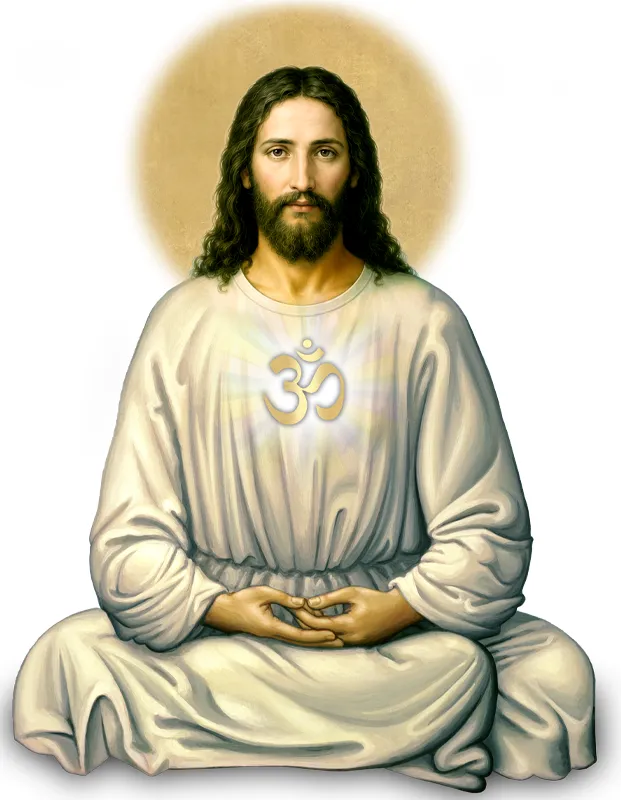
The Glories and Powers of AOM

Om SymbolChapter 8 Pranava Yoga

The amount of material in the authoritative scriptures of India and the words of realized saints regarding Aom, is truly surprising. Here I have arranged extracts from the scriptures as well as from Vyasa and Shankara, the two greatest authorities on the scriptures, to give an overview of the whole subject of Aom in its various aspects.

Aom is God (Brahman).

Aom is Brahman, the Primeval Being” (Brihadaranyaka Upanishad 5.1.1).

“That [Aom] is the quintessence of the essences, the Supreme, the highest” (Chandogya Upanishad 1.1.3).

“I will tell you briefly of that Goal which all the Vedas with one voice propound, which all the austerities speak of, and wishing for Which people practice discipline: It is Aom” (Katha Upanishad 1. 2.15-17).

Aom is the Supreme Brahman” (Svetasvatara Upanishad 1:7).

“God is the Syllable Aom” (Svetasvatara Upanishad 4:17).

Aom is Brahman” (Taittiriya Upanishad 1.8.1).

“Brahman is the Truth that is indicated as ‘Aom.’” (Yoga Vashishtha 6:1:30).

“The monosyllable Aom is the highest Brahman” (Manu Smriti 2:83,87).

Aom is both Saguna (With Form) and Nirguna (Without Form) Brahman

It is commonly thought that Aom is to be used only for meditation on the Formless Transcendent (Nirguna) Brahman, but the following show that, since Aom encompasses both the Saguna and Nirguna aspects of Brahman, it can also be used for meditation on God With Form. Saguna and Nirguna are sometimes spoken of as “lower” or “lesser” and “higher.”

Aom, indeed, is the Lower Brahman; this is, indeed, the Higher Brahman. Anyone who, meditating on Aom, wishes either of the Two [aspects], by him that is attained. This [Aom] is the best means [of attainment and realization]; this means is the Higher and Lesser Brahman” (Katha Upanishad 1. 2.15-17).

Aom is verily the higher and the lower Brahman. Therefore with this alone does the wise man reach the one or the other ” (Prashna Upanishad 5.2).

“Whether the unconditioned Brahman or the conditioned Brahman, the Syllable Aom becomes a means of realizing It. For another scripture has it, ‘The Syllable Aom is the higher and lower Brahman.’” (Shankara, Commentary on the Brihadaranyaka Upanishad).

Aom is both the higher and the lesser Brahman” (Shankara, Commentary on the Mandukya Karika).

Aom is the True Name of God

Aom is the Name of the Supreme Lord” (Shankara, Commentary on the Yoga Sutras).

Aom bestows the vision of God

“As the form of fire when latent in its source is not seen and yet its seed is not destroyed, but may be seized again and again in its source by means of the drill [a pointed stick whirled to produce fire for the Vedic sacrifices], so it is in both cases. The Self has to be seized in the body by means of the Syllable Aom. By making one’s body the lower friction stick and the Syllable Aom the upper friction stick, by practicing the friction of meditation one may see the hidden God, as it were” (Svetasvatara Upanishad 1:13,14).

“That which is manifested by the Pranava is the Lord (Ishwara) Himself. …When the yogi has recognized the power of Aom to express Its meaning, the Lord, he should undertake japa and meditation of It on the Lord Who is signified by Aom. When the yogi thus engages in japa and meditation of Aom, his mind becomes one-pointed. So it has been said: ‘After Aom japa, let him set himself in yoga [meditation], after yoga, let him set himself to japa. When Aom japa and meditation come to perfection the Supreme Self [Paramatman] shines forth.’” (Vyasa, Commentary on the Yoga Sutras).

Aom unites us with God (Brahman).

“Taking as the bow the great weapon of the Upanishads [Aom], one should place in It the arrow sharpened by meditation. Drawing It with a mind engaged in the contemplation of That [Brahman], O beloved, know that Imperishable Brahman as the target. The Syllable Aom is the bow: one’s self, indeed, is the arrow. Brahman is spoken of as the target of that. It is to be hit without making a mistake. Thus one becomes united with it [Brahman] as the arrow becomes one with the target. He in Whom the sky, the earth, and the interspace are woven, as also the mind along with all the pranas, know Him alone as the one Self. Dismiss other utterances. This [Aom] is the bridge to immortality. Meditate on Aom as the Self. May you be successful in crossing over to the farther shore of darkness” (Mundaka Upanishad 2.2.3-6).

Aom is the Supreme Brahman…. The knowers of Brahman by knowing what is therein [in the all-containing Aom] become merged in Brahman” (Svetasvatara Upanishad 1:7).

“He who utters Aom with the intention ‘I shall attain Brahman’ does verily attain Brahman” (Taittiriya Upanishad 1.8.1).

“The holy word, Aom bestows the highest state” (Yoga Vashishtha 5:54).

“Just as the bow is the cause of the arrow’s hitting the target, so Aom is the bow that brings about the soul’s entry into the Immutable. For the soul when purified by the repetition of Aom gets fixed in Brahman with the help of Aom without any hindrance, just as an arrow shot from a bow gets transfixed in the target” (Shankara, Commentary on the Mundaka Upanishad).

“Yogis who are engaged in both japa and meditation attain one-pointedness of mind. After japa, which causes his mind to bow before the Lord, let him engage in meditation. When his mind becomes unwavering from meditation on the Lord, let him do japa of Aom, for japa leads to meditation. When japa and meditation of Aom come to perfection then the Supreme Lord (Parameshwara), the Supreme Self (Paramatman) Who stands in the highest place shines forth for the yogi” (Shankara, Commentary on the Yoga Sutras).

Aom is the Veda of Brahman-knowers

Aom is…the Veda which the knowers of Brahman know” (Brihadaranyaka Upanishad 5.1.1).

“The threefold Knowledge is based on the Omkara. It [Aom] is another Triple Veda; he who knows that Aom is truly learned in the Veda” (Manu Smriti 11:266).

Aom is the mantra by which we worship God and the gods

“Among words I am the Ekakshara [Aom]; among sacrifices I am the sacrifice of japa” (Bhagavad Gita 10:25) The word yajna, usually translated “sacrifice,” has more the idea of offering. Japa of Aom is certainly the highest offering possible, for it is God Who is being offered.

“How should one perform devotion to the Lord, and what is the means of that devotion? To explain the form in which the devotee contemplates on Him, the sutra says: ‘His designator [vachaka] is the Pranava [Aom].’ Of the Lord Who has been described, the designating Word is the Pranava. …The word Pranava is explained in the following way etymologically: pra stands for prakarshena: ‘perfectly;’ nu (from nava) means nuyate: ‘He is praised.’ Thus Pranava, the word Aom, praises (pranauti) the Lord. That is, the Lord is devoutly worshipped (pranidhiyate) through It by His devotees. They bow down (pranam) to Him through It. Through It they worship (pranidha) the Lord mentally; here the extra dha stands for the final [syllable] va of Pranava. …From the termination ava is understood avati: ‘He favors.’ He brings out His devotees from samsara, He leads those in samsara to nirvana, he brings to a devotee unsurpassed joy, he grants him samadhi to lead him to the highest truth. But all these meanings are associated with the most intense love of the Lord. …When the Lord is continuously worshipped in the mind by means of this syllable, Aom, He gives His grace. …Through Aom the Lord is met face to face” (Shankara, Commentary on the Yoga Sutras).

“It is proper to employ Aom as a means for practicing worship of God. …When the yogi has understood the identity of Aom and Brahman he attracts the grace of the supreme Lord through Its japa and meditation. Meditation is setting the heart on the Lord Who is designated by Aom and brought into the mind by It” (Shankara, Commentary on the Yoga Sutras).

Aom, being God, should also be worshipped

“Just as the image of Vishnu or any other god is regarded as identical with that god (for purposes of worship), so is Aom to be treated as Brahman” (Shankara, Commentary on the Brihadaranyaka Upanishad).

“The syllable Aom is the inmost essence of all essences. It is supreme because of Its being the symbol of the Supreme Self. It is competent to be worshipped as the Supreme Self. It is competent to take the place of the Supreme Self since It is to be worshipped like the Supreme Self” (Shankara, Commentary on the Chandogya Upanishad).

“The Vedic rites are meant for the worship of the very Aom because It is a symbol of the Supreme Self. The worship of That [Aom] is surely the worship of the supreme Self” (Shankara, Commentary on the Chandogya Upanishad).

Aom is the key to our spirit (atman).

“He obtains wishes by singing [intoning], who knowing this, meditates on the udgitha [Aom] as the syllable. This, with regard to the self” (Chandogya Upanishad 1.2.14) Lest we misunderstand and think that Aom is to be employed to fulfill just any desire or whim, in this verse the sage informs us that the “wishes” gained through meditation on Aom are those relating to the Self, the immortal spirit; that those who have lost the consciousness of the Self shall regain it through Aom meditation.

“The Self [atman] is of the nature of the Syllable Aom” (Mandukya Upanishad 1.8.12).

Aom is our spirit (atman).

“The Self [atman] is of the nature of the Syllable Aom. Thus the Syllable Aom is the very Self. He who knows It thus enters the Self [Supreme Spirit] with his self [individual spirit]” (Mandukya Upanishad 1,8,12).

“Meditate on Aom as the Self” (Mundaka Upanishad 2.2.3-6).

Aom enables us to know both our Self and God, the Self of our Self

“The Self [atman] is of the nature of the Syllable Aom. Thus the Syllable Aom is the very Self. He who knows It thus enters the Self [Supreme Spirit] with his self [individual spirit]” (Mandukya Upanishad 1.8.12).

“I shall now enter into the self by the self indicated by the culmination of the Aom-sound–as a lamp without fuel” (Yoga Vashishtha 5:87).

“The one that is awakened is the inner self, that is the supreme self whose name is Aom” (Yoga Vashishtha 6:2:48).

Aom is essentially the same as the Self. …And the Supreme Brahman, too, is but Aom. …Aom is the same as the supreme as well as the inferior Brahman…by virtue of its being a means for the attainment of Brahman” (Shankara, Commentary on the Mandukya Upanishad).

Aom is the source of creation and evolution

“The Cosmic Spirit utters Aom and by pure will creates the various objects” (Yoga Vashishtha 3:67).

Aom is the essence of the evolutionary solar energies

The life-producing energies of the sun are the energies of Aom. Aom is the sun of body, mind, and spirit, the Life-Giver of all. All plant, animal, and human life on this planet depends upon the sun. It is the subtle powers of sunlight which stimulate growth and evolution. The sun truly awakens us in the deepest sense. As the germinating seed struggles upward toward the sun and out into its life-giving rays, so all higher forms of life reach out for the sun, which acts as a metaphysical magnet, drawing them upward and outward toward ever-expanding consciousness. Sunlight is the radiant form of Aom, so the sun initiates the entire solar system into Aom. Human beings are solar creatures, therefore to intone Aom is the most natural thing they can do.

“Now, verily, what is the udgitha is the Aom. What is Aom is the udgitha. And so verily, the udgitha is the yonder sun and the Aom, for the sun is continually sounding ‘Aom.’” (Chandogya Upanishad 1.5.1) The most significant part of this verse is the statement that “the sun is continually sounding ‘Aom,’” indicating that the evolutionary energy of the sun is a manifestation of Aom. Our life depends on the light of the sun, thus our life is also a manifestation of the power of Aom. The japa and meditation of Aom aligns us with the solar powers that are Aom and thereby greatly increase our life force and the evolution of all the levels of our being.

“Even as a great extending highway runs between two villages, this one and that yonder, even so the rays of the sun go to both these worlds, this one and that yonder. They start from the yonder sun and enter into the nadis [astral “nerves”]. They start from the nadis and enter into the yonder sun. …When a man departs from this body, then he goes upwards by these very rays or he goes up with the thought of Aom. As his mind is failing, he goes to the sun. That, verily, is the gateway of the world, an entering in for the knowers, a shutting out for the non-knowers” (Chandogya Upanishad 8.6.2,5).

Aom encompasses and comprises all being and existence

“Verily, the Syllable Aom is all this, yea, the Syllable Aom is all this” (Chandogya Upanishad 2.23.3).

Aom: this Syllable is all this” (Mandukya Upanishad 1,8,12).

Aom is past, present, future, and eternity

“All that is past, the present and the future, all this is only the Syllable Aom. And whatever else there is beyond the threefold time, that too is only the Syllable Aom” (Mandukya Upanishad 1,8,12).

Aom is protection

“Remember Aom, the Lord, the Protector” (Yajur Veda 40:15).

Aom produces peace and harmony

“Only Its [Aom’s] knowers sit here in peace and concord” (Rig Veda I.164.39).

“My heart is established in the peace indicated by the resonance of Aom” (Yoga Vashishtha 5:87).

“He should repeat Aom till the mind gains perfect peace” (Yoga Vashishtha 6:1:128).

Aom liberates us at the time of death

“At the time of departure from this world, remember Aom” (Yajur Veda 40:15).

“Then Satyakama, son of Shibi, asked him [the Rishi Pippalada]: ‘Venerable Sir, what world does he who meditates on Aom until the end of his life, win by That?’ To him, he said: ‘If he meditates on the Supreme Being [Parampurusha] with the Syllable Aom, he becomes one with the Light, the Sun. He is led to the world of Brahman. He sees the Person that dwells in the body, Who is higher than the highest life. …That the wise one attains, even by the mere sound Aom as support, That Which is tranquil, unaging, immortal, fearless, and supreme” (Prashna Upanishad 5:1,5,7).

“Having confined the mind in the heart and…engaged in the practice of concentration, uttering the one-syllabled Aom–the Brahman–and remembering Me, he who departs, leaving the body, attains to the Supreme Goal” (Bhagavad Gita 8:12-14).

“The soul, when it departs from the body, goes upward by meditating on the Self with the help of Aom as he did while living” (Shankara, Commentary on the Chandogya Upanishad).

Aom delivers us from rebirth (samsara).

Aom is the Supreme Brahman…. The knowers of Brahman by knowing what is therein [in the all-containing Aom] become merged in Brahman, intent thereon [i.e., on Aom] and freed from birth” (Svetasvatara Upanishad 1:7).

“By means of the boat of Aom that is Brahman one crosses over [samsara, the ocean of birth and death]. The idea is that by controlling the senses through Aom the enlightened person should cross over the currents of the river of transmigration with the help of that Aom” (Shankara, Commentary on the Svetasvatara Upanishad).

Aom conquers fear

“One should concentrate one’s mind on Aom, for Aom is Brahman beyond fear. For a man, ever fixed in Brahman, there can be no fear anywhere” (Gaudapada [the teacher of Shankara], Mandukya Karika 25).

“One should concentrate the mind on Aom, Which is essentially the supreme Reality, for Aom is Brahman beyond fear, because for one who is ever fixed in It, there can be no fear anywhere, in accordance with the Vedic text, ‘The enlightened man is not afraid of anything.’” (Shankara, Commentary on the Mandukya Karika).

Aom contains–and confers–all states of consciousness

“[The turiyatita state] is the Eternal, beyond the eternal and the transient; it is a pure mass of consciousness. In it there is no question of diversity. It is all, it is supreme blessedness and peace, it is beyond expression. It is purest Aom. It is transcendent. It is supreme” (Yoga Vashishtha 6:1:34).

Aom confers all true and worthwhile knowledge

“Through it [Aom] one knows what is to be known” (Brihadaranyaka Upanishad 5.1.1).

“By this [Aom] does the threefold knowledge proceed” (Chandogya Upanishad 1.1.6-10. “The threefold knowledge” may be interpreted as being knowledge of body, mind, and spirit, knowledge of the physical, astral, and causal worlds, knowledge of the threefold Vedas, or knowledge of the Three Eternals: God, Creation, and Souls. Whichever it might be, it is certain that Aom is the basis of such knowledge. In other places we see that to know Aom is to know the Veda.).

“God is the Syllable Aom, out of Him proceeds the Supreme Knowledge” (Svetasvatara Upanishad 4:17).

“The threefold Knowledge is based on the Omkara. It [Aom] is another Triple Veda; he who knows that Aom is truly learned in the Veda” (Manu Smriti 11:266).

Aom bestows immortality

“One should meditate on the udgitha as this syllable [Aom]….This sound is that syllable, the immortal, the fearless. Having entered this, the gods became immortal, fearless. He who knows it thus, praises this Syllable, takes refuge in that Syllable, in the immortal, fearless sound, and having entered it, he becomes immortal, even as the gods became immortal” (Chandogya Upanishad 1.4.1-5).

“This [Aom] is the bridge to immortality” (Mundaka Upanishad 2.2.5).

“Because Aom is the symbol of the Supreme Self it is the cause of immortality” (Shankara, Commentary on the Chandogya Upanishad).

Aom removes all obstacles

“From it [Aom] comes the disappearance of obstacles” (Yoga Sutras of Patanjali).

Aom is the supreme mantra

“This [Aom] is the best means [of attainment and realization]; this means is the Higher and Lesser Brahman. Meditating on Aom, one becomes worthy of worship in the world of Brahman” (Katha Upanishad 1. 2.16, 17).

Aom, being so important, should be used as a means to self-realization. If it is used as a means to realization, the entire Vedas are practically used” (Shankara, Commentary on the Brihadaranyaka Upanishad).

“One should meditate on the syllable Aom, which is the Udgitha. This syllable, Aom, as the Name of the Supreme Reality, is nearest to Him; when It is used He surely becomes gracious just as a man becomes so when his favorite name is used. …It is a symbol [indicator] of the Supreme Self (Paramatma). Thus it is known in all the Upanishads that Aom, as a name and as a symbol, holds the highest position of being an aid to the meditation of the Supreme Self. …The syllable Aom is the inmost essence of all essences. It is supreme because of Its being the symbol of the Supreme Self. It is competent to be worshipped as the Supreme Self. It is competent to take the place of the Supreme Self since It is to be worshipped like the Supreme Self” (Shankara, Commentary on the Chandogya Upanishad).

Aom being beyond measures is Turiya, It has infinite dimension and Its extent cannot be determined. It is auspicious and holy because of the negation of all duality. He who knows Aom is a sage because of his meditating on the Supreme Reality, and not any other man, though he may be learned in the scriptures” (Shankara, Commentary on the Mandukya Karika).

Aom should be the object/subject of our meditation

“One should meditate on this Syllable [Aom]” (Chandogya Upanishad 1.1.1).

“Meditate on Aom as the Self. May you be successful in crossing over to the farther shore of darkness” (Mundaka Upanishad 2.2.6).

Aom is the foremost object of meditation

“Dismiss other utterances. This [Aom] is the bridge to immortality” (Mundaka Upanishad 2.2.5).

“The monosyllable Aom is the highest Brahman. …Undoubtedly a Brahmin reaches the highest goal by japa of Aom alone, whether he performs other rites or neglects them” (Manu Smriti 2:83,87).

“Ishwara [God] is a particular Purusha [Spirit, Person] Who is untouched by the afflictions of life, actions, and the results and impressions produced by these actions. In Him is the highest limit of omniscience. Being unconditioned by time He is teacher even of the ancients. His designator [vachaka] is the Pranava [Aom]. Its japa [constant repetition] and meditation is the way [or: should be done]. From it result [come] the disappearance of obstacles and the turning inward of consciousness. Disease, languor, doubt, carelessness, laziness, worldly-mindedness, delusion, non-achievement of a stage, instability, these cause the distraction of the mind and they are the obstacles. [Mental] pain, despair, nervousness, and agitation are the symptoms of a distracted condition of mind. For removing these obstacles [there should be] the constant practice of the one principle [the japa and meditation of Aom]” (Yoga Sutras of Patanjali 24-32).

“Having known Aom, one should not think of anything whatsoever [but Aom]” (Gaudapada, Mandukya Karika 24).

Aom is surely the lower Brahman; and Aom is considered to be the higher Brahman. Aom is without cause, and without inside and outside; and It is undecaying. Aom is indeed the beginning, middle, and end–everything. Having known this way indeed one attains immediately. One should know Aom to be God seated in the hearts of all. Meditating on the all-pervasive Aom, the intelligent man grieves no more. The Aom, without measures and possessed of infinite dimension, is the auspicious entity where all duality ceases. He by whom Aom is known, is the real sage, and not so is any other man” (Gaudapada, Mandukya Karika 24,26-29).

“When the syllable Aom is known, one should not think of anything whatsoever, serving any seen or unseen purpose; for he has got all his desires fulfilled” (Shankara, Commentary on the Mandukya Karika).

Aom is used to serve as a means to the meditation on Brahman. As other scriptures say, ‘This is the best help (to the realization of Brahman) and the highest.’…‘One should concentrate on the Self, uttering Aom.’ [Mahanarayan Upanishad 24:1] ‘One should meditate upon the Supreme Being only through the Syllable Aom.’ [Prashna Upanishad 5:5] ‘Meditate upon the Self with the help of the Syllable Aom.’ [Mundaka Upanishad 2.2.6] And so on. Although the words ‘Brahman,’ ‘Atman,’ etc. are names of Brahman, yet on the authority of the scriptures we know that Aom is Its most intimate appellation. Therefore it is the best means for the realization of Brahman” (Shankara, Commentary on the Brihadaranyaka Upanishad).

Aom should be intoned in time with the breath

“Speech and breath are joined together in the Syllable Aom” (Chandogya Upanishad 1.1.6) Both speech and breath are manifested and reunited in Aom–both in speaking Aom aloud and in mentally intoning it in time with the breath. Aom is the point of their origin and their return. By joining Aom and the breath in japa and meditation we begin moving back to the state where they are one.

“One should meditate on the breath in the mouth as the udgitha, for it is continually sounding ‘Aom.’” (Chandogya Upanishad 1.5.3) In both japa and meditation we join intonations of Aom to the breath because on the subtle levels the breath is always producing the sound of Aom. We can even say that the soul breathes Aom. So by consciously joining Aom to our breathing we can link up with our soul-consciousness and enter into it. This is what is happening when during meditation our intonations of Aom become more subtle and whisper-like, and from soul-consciousness we will pass into spirit-consciousness–all through Aom.

Aom is (and accomplishes) the highest pranayama

“Pranayama is accomplished by effortlessly breathing and joining to it the repetition of the sacred Aom with the experience of Its meaning, when the consciousness reaches the deep sleep state” (Yoga Vashishtha 5:78).

Aom is the Sound that leads to Silence

“I abandon all thoughts and notions; contemplating Aom, I shall remain in the self, in total inner silence” (Yoga Vashishtha 5:81).

The idea is not that after some time in meditation we simply sit, silent and blank, but rather that the inner intonations of Aom become increasingly subtle until they pass beyond sound into an actual silent form–not the mere cessation of repetition–that is the state (stithi) of Aom, from which all sounds arise: the bhava of Aom.

Aom transforms us into divinity

“This is the udgitha [Aom], highest and best. This is endless. He who, knowing this, meditates on udgitha, the highest and best, becomes the highest and best and obtains the highest and best worlds. When Atidhanvan Shunaka taught this udgitha to Udara Sandilya, he also said: ‘As long as they shall know this udgitha among your descendants, so long their life in this world will be the highest and best.’ And so will their state in that other world be. One who thus knows and meditates–his life in this world becomes the highest and best, and so his state in that other world, yea, in that other world.’” (Chandogya Upanishad 1.9.2-4.)

“Highest and best” is an upanishadic title for God.)

Read the next chapter in Pranava Yoga:  Afterword: It Is All Up To You

Pranava Yoga links: